Grain Direction Woodworking: How to Read, Mill
Learn how grain direction woodworking affects tearout, machine feed orientation, and seasonal wood movement. Follow workshop methods to read boards and build durable joints.
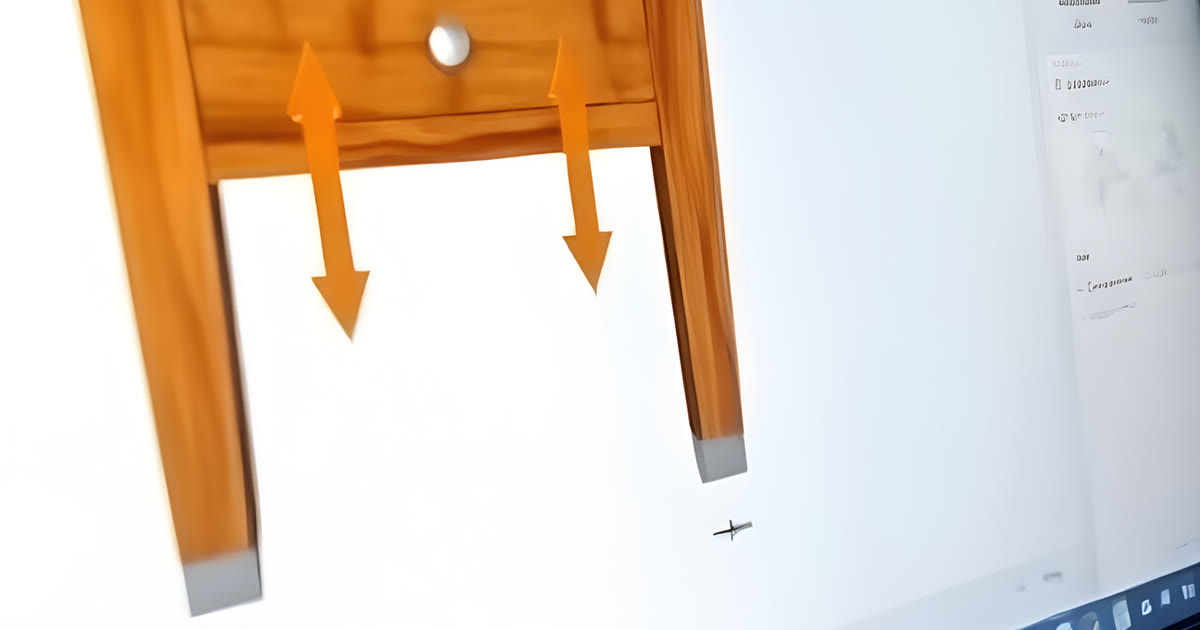
In grain direction woodworking, the alignment of longitudinal wood cells dictates how timber cuts, holds screws, and reacts to moisture. Cutting along the grain produces clean shavings, while cutting against it lifts fibers and tears deep craters into the surface. At the same time, wood expands across its width while staying stable along its length, meaning poor grain planning can split a tabletop within a single season.
Controlling grain starts before turning on a jointer or table saw. Reading growth rings on board edges and cathedral arches on flat-sawn faces reveals which way to feed stock through machinery. Digital planning tools like TimberTinker let woodworkers verify part grain orientation and joint assignments on 3D models before making the first cut, ensuring that cut lists protect structural stability from rough lumber to final assembly.
Step by step
- Inspect growth rings along the edges of rough lumber to find the slope of the fibers relative to the face.
- Read cathedral patterns on flat-sawn faces, checking both top and bottom surfaces because their grain slopes run in opposite directions.
- Feed the board across the jointer so the bottom-mounted cutterhead cuts with the grain rather than lifting fibers.
- Reverse the board end-for-end before feeding it through the thickness planer to compensate for the top-mounted cutterhead.
- Crosscut structural parts so grain runs vertically along leg posts and horizontally along shelf spans, referencing a cut list like TimberTinker generates to track part grain orientation.
- Mount solid panels using slotted holes, steel figure-eight fasteners, or z-clips to allow the wood to expand and contract across its width.
Reading Grain Direction on Faces and Edges
To plane or joint a board cleanly, the blade must travel in the direction the wood fibers slope upward toward the surface. Look closely at the edge of the board. The annual growth rings run at an angle, pointing like slanted quills. If the fibers angle upward from right to left, moving a plane from right to left lays the fibers down. Cutting from left to right drives the cutter under the fibers, prying them upward and leaving rough tearout.
On flat-sawn faces, look for cathedral grain patterns. The tips of these arching lines indicate grain direction: plane or rout in the direction the cathedrals point. However, flat-sawn boards have opposite face grain directions on the top and bottom faces. Because the tree rings curve through the thickness of the board, the bark side slopes one way while the pith side slopes the opposite way. Always re-check the grain on the reverse face before flipping stock over for a second pass.
Grain Direction Woodworking in Jointing and Planing
Milling flat faces requires understanding where the cutting knives strike the wood. On a jointer, the cutterhead sits below the stock, cutting into the bottom face as the board slides across the tables. To avoid tearout, feed the stock so the fibers on the bottom face angle backward toward you, allowing the knives to slice cleanly along the slope.
When moving to a thickness planer, the cutterhead sits above the stock, cutting downward into the top face. Because the cutter acts on the opposite side of the board from above, the required feed direction reverses. Feeding a board into the planer in the exact orientation used on the jointer drives the top knives straight into the upward-sloping grain. Spin the board 180 degrees end-for-end before feeding it through the planer so the top knives cut with the grain.
Seasonal Movement and Fastening Rules
Solid wood expands and contracts across its width and thickness as humidity shifts throughout the year, but movement along its length is practically zero. A 36-inch wide flat-sawn red oak tabletop can shift by a full 1/4 inch between dry winter heating and humid summer weather. Fastening that top rigidly to an apron base with standard pocket screws will eventually crack the solid panel as the wood tries to move against the fixed screws.
Accommodating cross-grain movement requires mechanical fasteners that slide. Steel figure-eight fasteners sit in shallow mortises on the apron edge and pivot as the top shifts. Steel z-clips slide inside a kerf cut along the inside face of the aprons. When driving screws through solid apron cleats, drill elongated slots rather than round pilot holes so the screw shank can travel sideways as the tabletop breathes.
Grain Alignment for Structural Loads
Solid lumber is exceptionally strong along its length but splits easily across the grain. Table legs require vertical grain along their length to carry downward loads directly through the trunk axis. Horizontal aprons and shelf rails require lengthwise grain across their spans. An apron cut with vertical grain across a 4-inch width and 30-inch span will snap under light downward pressure because short grain cannot support bending loads.
Sheet goods like 3/4-inch birch plywood solve cross-grain weakness by alternating veneer layers by 90 degrees. Even so, the outer face veneer runs lengthwise along an 8-foot sheet, giving the panel its greatest stiffness along that primary axis. When laying out long cabinet shelves, orient the outer grain along the shelf span to prevent sagging under heavy loads.
Planning Grain on Cut Lists Before Sawing
Verifying grain direction during the design stage avoids miscuts and wasted hardwood. TimberTinker allows woodworkers to design furniture in 3D using standard dimensional stock or sheet goods. You can adjust dimensions, pick species like walnut, cherry, or oak, and assign joinery such as mortise and tenon joints, dados, or pocket screws directly to each part.
The app groups parts by material and displays grain direction on the cut list alongside joint details. It also generates automatic sheet nesting layouts to align plywood parts with the correct face grain before you break down an 8-foot sheet. Checking these grain indicators on your phone before taking a board to the miter saw guarantees that every rail, stile, and panel matches your structural requirements.
Grain direction dictates how timber behaves under a blade and throughout the life of a finished build. Inspecting growth ring angles, matching feed direction to machine cutterhead positions, and allowing for seasonal expansion keeps surfaces clean and joinery intact. Taking time to read raw boards and confirming grain alignment on a 3D plan before cutting prevents ruined lumber, keeping projects flat, square, and structurally sound for decades.
Questions
What is grain direction woodworking?
Grain direction woodworking refers to cutting, milling, and joining lumber in harmony with the longitudinal alignment of wood cells. It determines how to pass boards across cutters without tearout, how to position weight-bearing parts, and how to allow for natural seasonal expansion.
Why does feed direction change between a jointer and a thickness planer?
On a jointer, the cutterhead sits below the bed and cuts the bottom face of the board upward. On a thickness planer, the cutterhead sits above the bed and cuts downward into the top face. Because the cutting action attacks opposite faces from opposite angles, feeding a board in the same direction through both machines causes tearout on the planer. You must reverse the board end-for-end between passes.

Try TimberTinker for yourself.
Get TimberTinkerWant more like this? Leave your email and I'll send the good stuff only.