How to Build a Standing Desk from 2x6 and 4x4 Lumber
Build a solid 46x22-inch modern standing desk using standard 4x4s and 2x6s with this complete cut list and assembly guide.
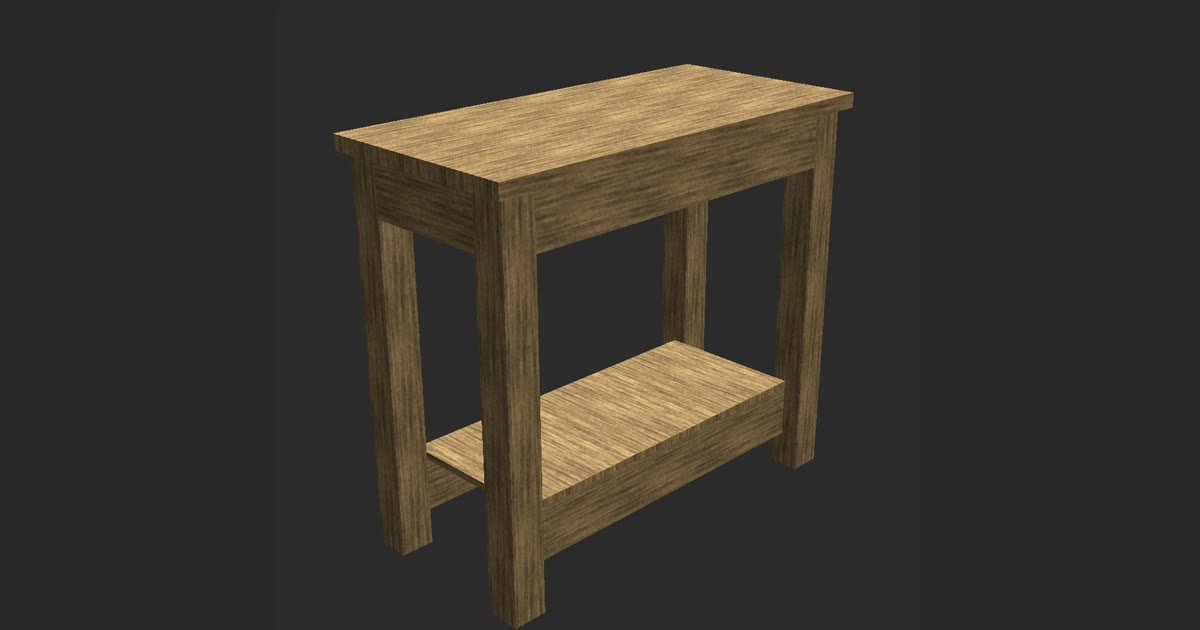
Learning how to build a standing desk with standard lumber gives you a rigid workspace without the wobble of lightweight metal frames. Four 4x4 legs tied together with 2x6 aprons and a lower shelf keep the worktop solid under daily typing pressure.
This design was made in TimberTinker and built board by board on film, matching the video build step for step. This guide covers the complete 15-piece cut list, exact lumber dimensions, joinery steps, and finishing techniques needed to assemble the 46-inch wide by 41-inch tall desk.
| Finished size | 46 in wide × 22 in deep × 41 in tall |
|---|---|
| Lumber | 4x4, 2x6, panel |
| Shelf height | 10 in |
| Pieces | 15 |
| Build order | legs → aprons → shelf → top |
Cut list
| Qty | Part | Lumber | Length |
|---|---|---|---|
| 4 | Leg | 4x4 | 39.5 in |
| 2 | Apron | 2x6 | 37 in |
| 2 | Apron | 2x6 | 13 in |
| 2 | Shelf | 2x6 | 37 in |
| 1 | Shelf | panel | 16 in |
| 4 | Top board | 2x6 | 46 in |
Step by step
- Cut the four 4x4 legs to 39.5 inches and verify square ends.
- Cut the 2x6 lumber into four 46-inch top boards, two 37-inch aprons, two 13-inch aprons, and two 37-inch shelf pieces.
- Cut the 0.75-inch panel shelf to 16 inches.
- Join the 4x4 legs with the 13-inch and 37-inch 2x6 aprons using pocket screws flush with the top edges.
- Mount the two 37-inch 2x6 shelf rails between the legs 10 inches from the floor.
- Secure the 16-inch panel shelf across the lower rails to lock the lower frame.
- Edge-glue the four 46-inch 2x6 boards to form the 46x22-inch desktop.
- Center the top on the base with a 1-inch overhang on all sides and fasten it from underneath.
- Sand the desktop smooth and apply three protective topcoats.
Standing Desk Sizing and Ergonomics
Standing desks require strict attention to height and stability because typing at standing height exaggerates any wobble in the base. This desk measures 46 inches wide, 22 inches deep, and 41 inches tall. A working height of 41 inches fits users between 5 feet 8 inches and 6 feet tall when resting forearms parallel to the desktop. The 22-inch depth accommodates a monitor and keyboard without eating up floor space in a home office or garage workshop.
The top overhangs the base frame by exactly 1 inch on all four sides. This 1-inch reveal provides clearance for clamping monitor arms or positioning the desk flush against baseboards while keeping the legs stable. Because the 4x4 legs sit inset by 1 inch, the load transfers straight down through the vertical posts without tilting the frame forward under pressure.
A dedicated lower shelf sits 10 inches up from the floor. Positioned between the rear legs and lower stretchers, this 10-inch height is both a footrest during long sessions and a storage deck for power strips or a computer tower. When planning projects in TimberTinker, positioning horizontal stretchers at this height locks the vertical legs against racking forces while leaving open space for your feet below.
Materials and the 15-Piece Cut List
Dimensional lumber is sold by nominal sizes, but its real finished dimensions in the shop are smaller. A standard 4x4 board measures 3.5 inches by 3.5 inches after surfacing. A standard 2x6 board measures 1.5 inches by 5.5 inches. The shelf insert uses panel stock measuring 0.75 inches thick by 37 inches long. Accounting for these exact measurements prevents math errors during layout and keeps the entire frame square.
You can verify every dimension and cut sequence in TimberTinker before cutting into your stock, ensuring that all 15 parts fit together accurately. The complete frame and desktop require 15 pieces cut from off-the-shelf boards: four 4x4 legs at 39.5 inches, two 2x6 aprons at 37 inches, two 2x6 aprons at 13 inches, two 2x6 shelf stretchers at 37 inches, one panel shelf at 16 inches, and four 2x6 top boards at 46 inches.
When selecting your 4x4 posts and 2x6 boards at the home center, sight down each edge to check for bows or twists. Pick boards with straight grain and minimal knots along the edges where pocket holes or screws will sit. Allow the lumber to acclimate in your workshop for several days so changes in humidity do not distort your joints after assembly.
How to Build a Standing Desk: Step-by-Step Assembly
The build order follows four clear stages: legs, then aprons, then shelf, then top. Begin by squaring the four 4x4 legs on your assembly table. Cut each leg to 39.5 inches with a miter saw, ensuring clean 90-degree end cuts so the desk sits flat on the floor. Mark the inner faces of each post to designate your front and rear assemblies.
Next, connect the legs using the 2x6 aprons. Drill pocket holes into the ends of the two 13-inch side aprons and the two 37-inch long aprons. Align the aprons flush with the top edges and outer faces of the 4x4 legs. Clamp each joint tightly with bar clamps before driving 2.5-inch pocket screws into the posts. Check the frame diagonally across the corners with a tape measure to confirm that the rectangular base is square.
Install the lower shelf support system 10 inches up from the bottom of the legs. Secure the two 37-inch 2x6 shelf stretchers between the legs using pocket screws or countersunk structural screws. Once the side stretchers are anchored, lay the 16-inch panel shelf across the opening. Fasten it down from above to tie the bottom frame together and eliminate side-to-side wobble.
Finish the build by assembling the desktop from the four 46-inch 2x6 boards. Edge-glue the four boards together with bar clamps, checking for a flat surface across the 22-inch depth. Once the glue cures, center the 46 by 22-inch top over the base to create the 1-inch overhang around the perimeter. Fasten the top from underneath through the aprons using tabletop fasteners or angled screws driven into pocket holes.
Sanding, Edge Prep, and Protective Finishing
Construction lumber features rounded factory edges that leave deep grooves when boards are joined edge-to-edge. If you did not rip those edges square on a table saw, use a hand plane or a belt sander with 80-grit paper to flatten the seams on the desktop. Progress from 120-grit to 180-grit sandpaper using a random orbital sander to create an even surface ready for finish.
A sharp edge against your forearms quickly causes fatigue at a standing desk. Ease all edges of the top boards with a 1/8-inch roundover router bit or a sanding block. Pay special attention to the front working edge where your wrists and arms rest during typing. Smooth the corner transitions on the 4x4 legs as well to prevent splinters.
Protect the pine surfaces with a durable finish that resists water rings and daily abrasion. Wipe away all sanding dust with a microfiber cloth or mineral spirits. Apply three coats of satin polyurethane or a hardwax oil finish, scuffing lightly with 320-grit sandpaper between coats. The satin sheen hides small surface imperfections while preserving the natural look of the thick timber framing.
Building your own solid wood standing desk gives you a dedicated workspace tailored to your body without commercial prices. By following the 15-piece cut list and securing the structural 4x4 legs with 2x6 stretchers, you gain a desk that will stay rigid through years of daily work.
Questions
How do you determine the correct standing desk height for your body?
Stand upright with your shoulders relaxed and bend your elbows at a 90-degree angle. Measure the distance from the floor to the underside of your forearms. That measurement represents your ideal desktop surface height. At 41 inches, this desk design fits average heights near 5 feet 10 inches.
Can you add locking casters to this standing desk without compromising stability?
Yes, but you must account for caster height. Standard 3-inch locking casters add roughly 4 inches of total height. To keep the finished desk at 41 inches tall, shorten the four 4x4 legs from 39.5 inches to 35.5 inches before installing heavy-duty, dual-locking industrial casters.

Try TimberTinker for yourself.
Get TimberTinkerWant more like this? Leave your email and I'll send the good stuff only.